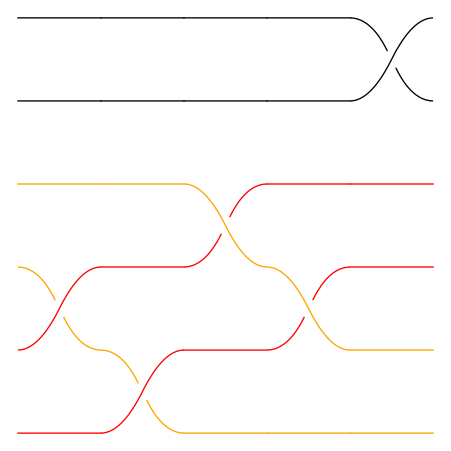
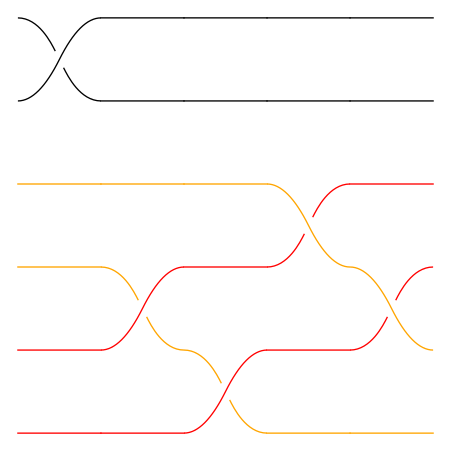
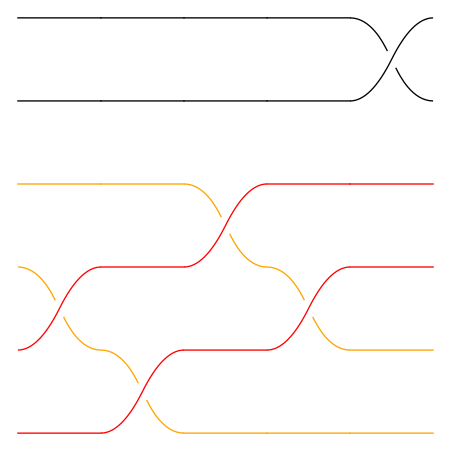
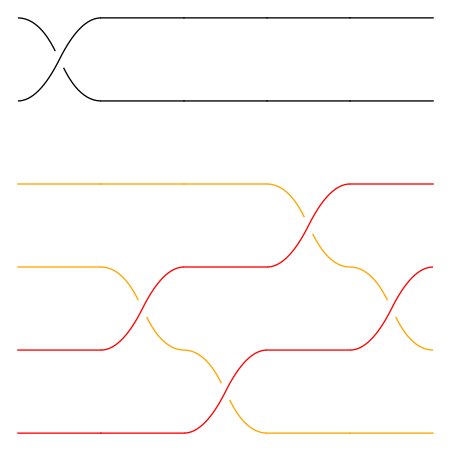
This is very much a rough note. Expect lots of updates.
There is a pair of string figures, Milky Way and Flock of Birds, which seem to cancel each other out. One forms Opening A, performs the figures one after the other, and arrives back at Opening A. It is quite the miracle, though it is hard to appreciate unless you are a giant string figure nerd. The paper
Eguchi, M. & Sato, T. (1996) “On the Relationship between the String Figure Series ‘Milky Way’ and ‘A Flock of Birds’.” Bulletin of the International String Figure Association 3:83-88.
ends with the following tantalizing remark
Although a formal mathematical analysis is beyond the scope of this paper, the reciprocal relationship between Milky Way and A Flock of Birds suggests that their weaving sequences are inverses of each other, a relationship worthy of further analysis.
Our 2026 Bridges paper, Of Loops, Braids, and String Figures: The Loopy Calculus of Cat’s Cradle provides a framework for carrying out this analysis.
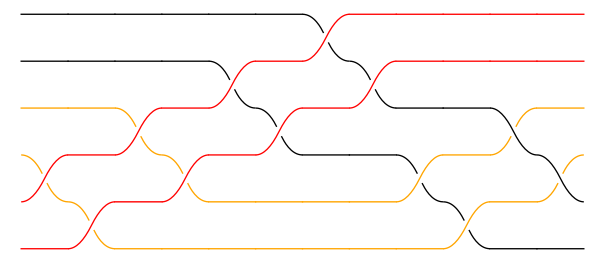
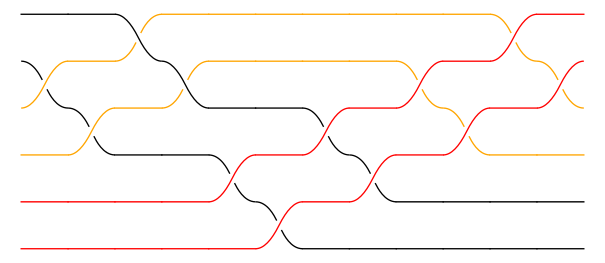
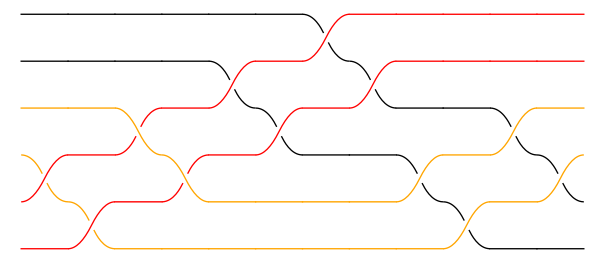
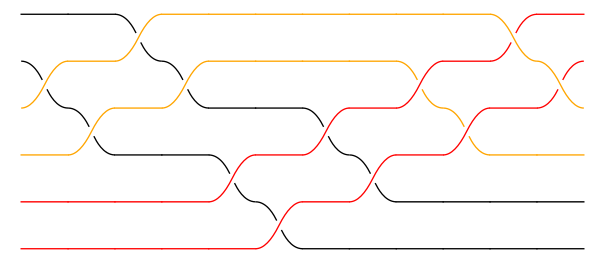
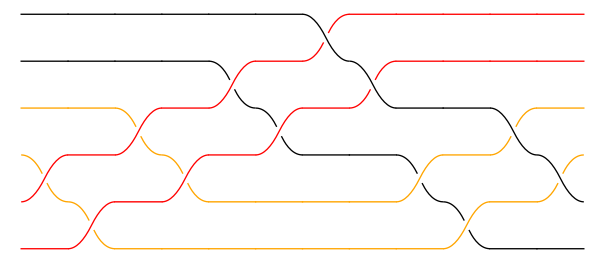
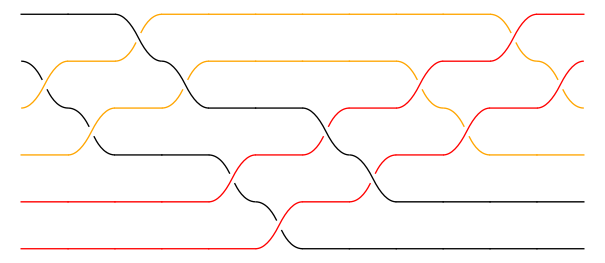
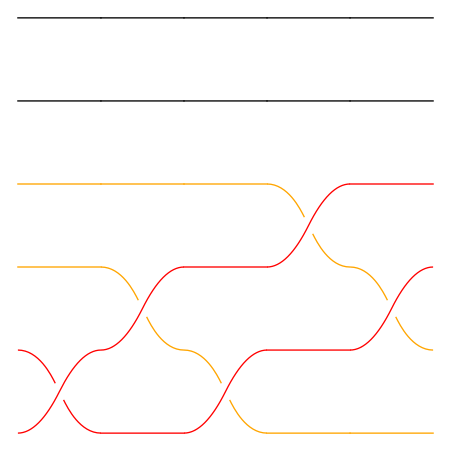
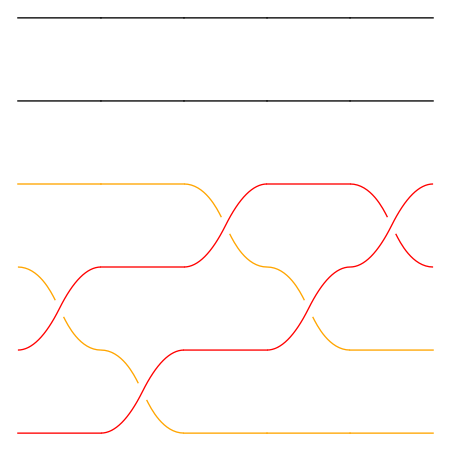
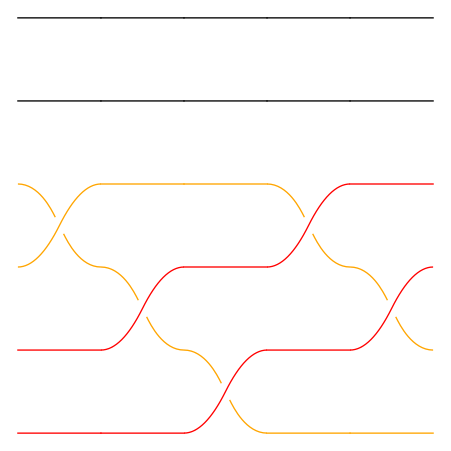
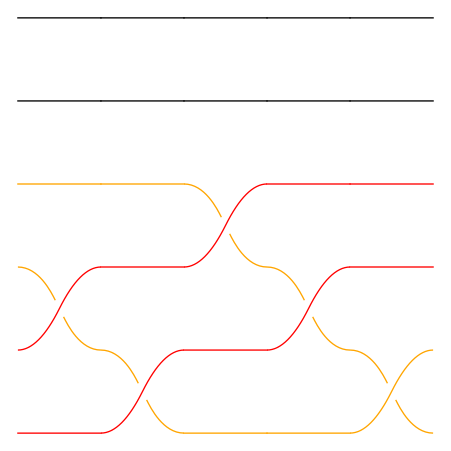
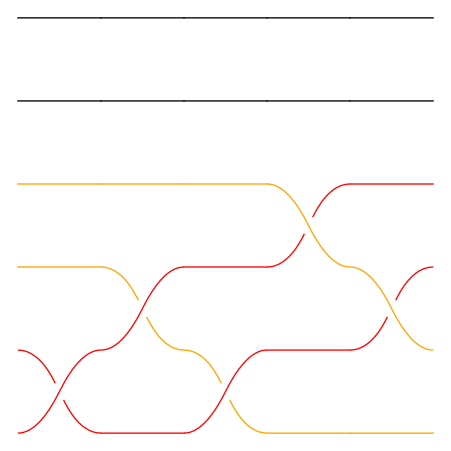
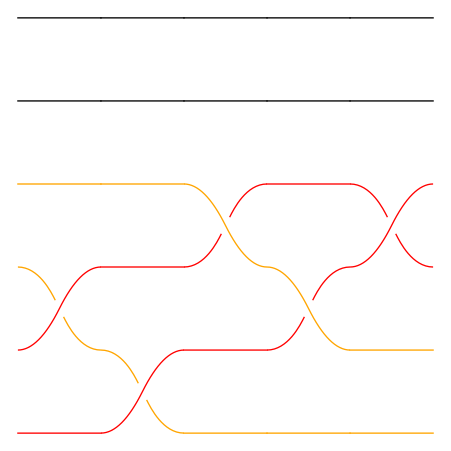
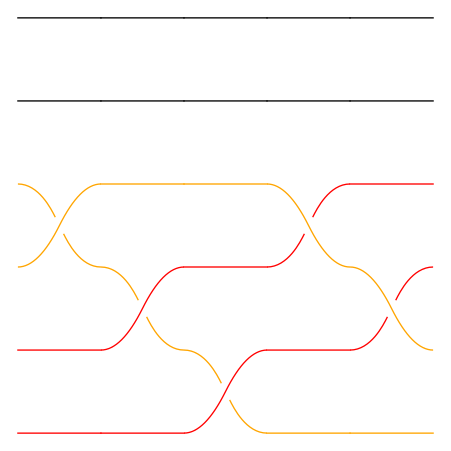
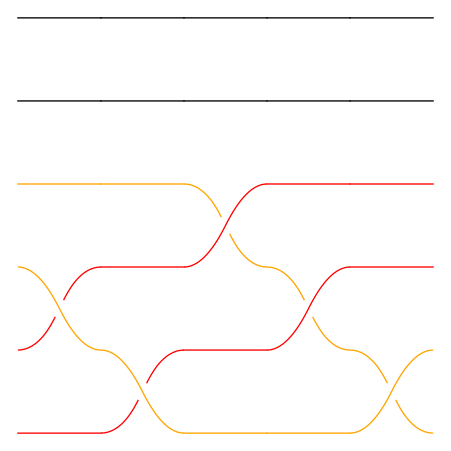
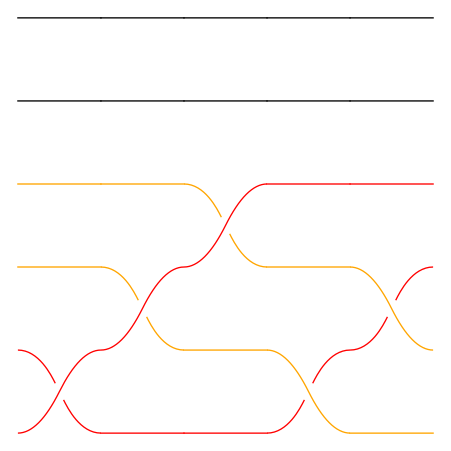
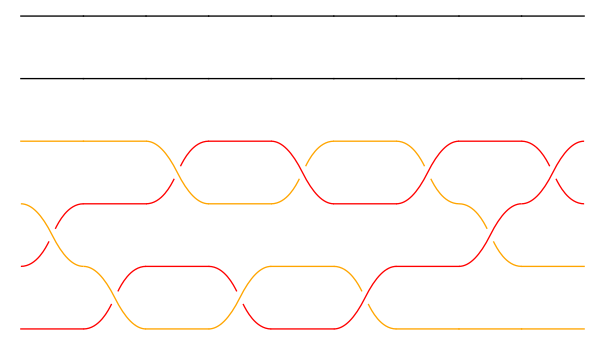
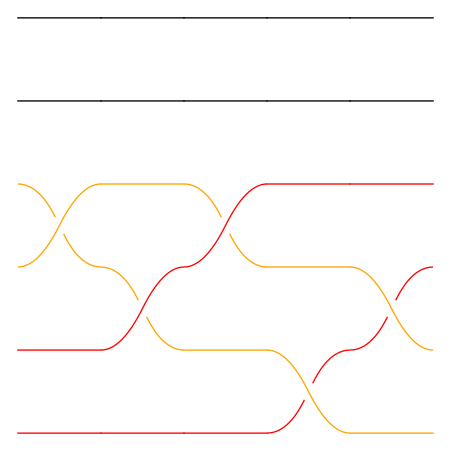
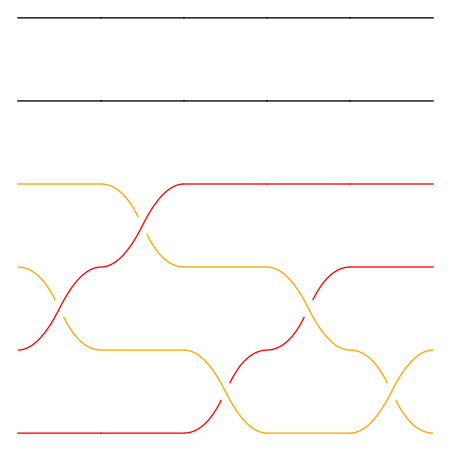
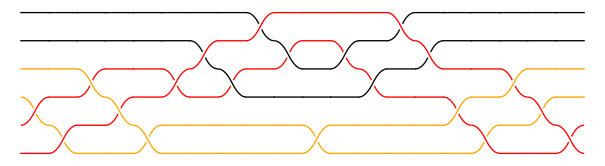
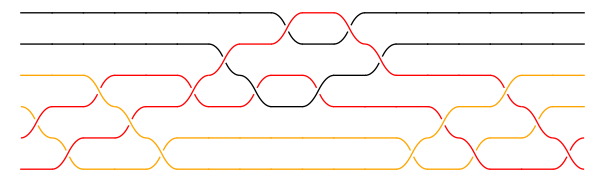
One first attempt to get a handle on the equivalence is to check $(FoB)(MW) = e$ in the braid group. This involves writing out the full braid word for each figure and checking that the figures do indeed cancel out. To verify the cancellation, we use the algorithm
Dehornoy, Patrick. “A fast method for comparing braids.” Advances in Mathematics 125.2 (1997): 200-235.
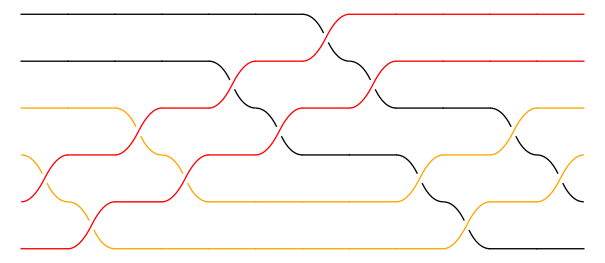
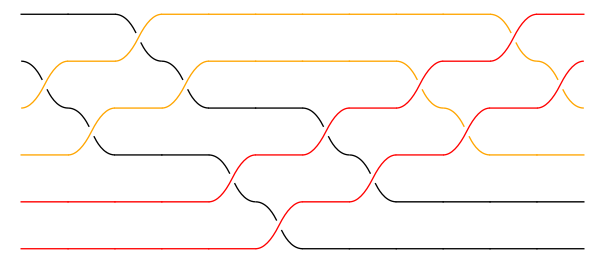
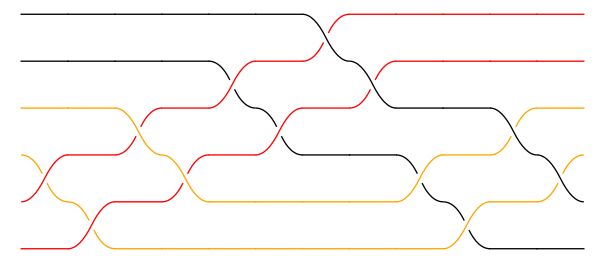
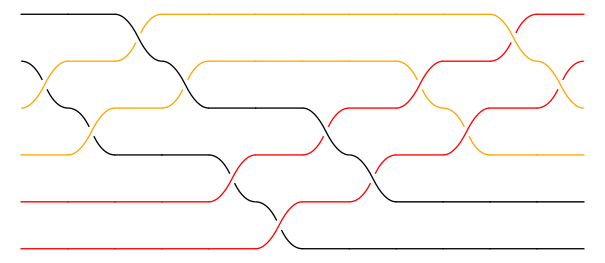
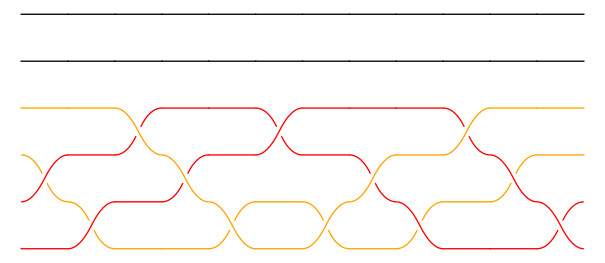
and plot the resulting braids using Sage.

































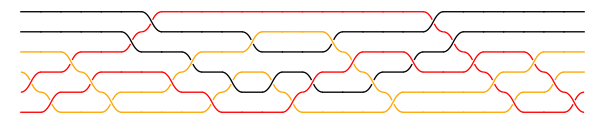
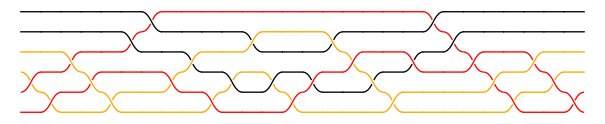
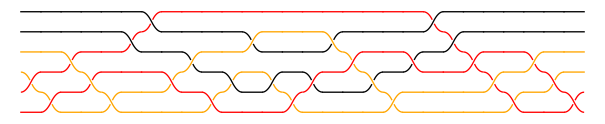
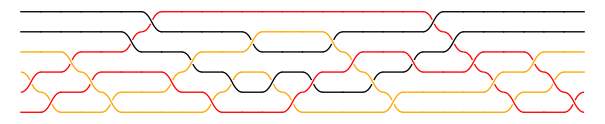
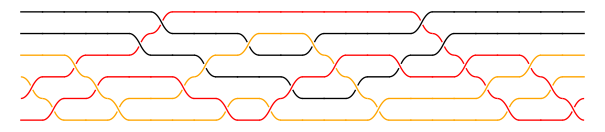
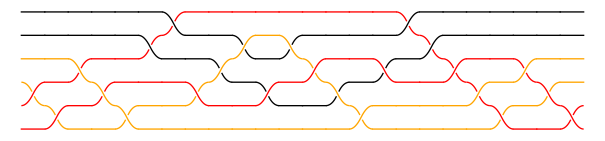
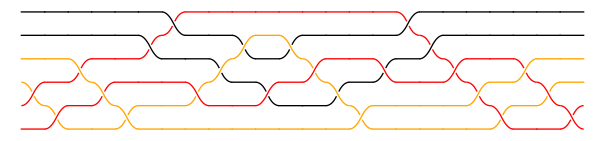
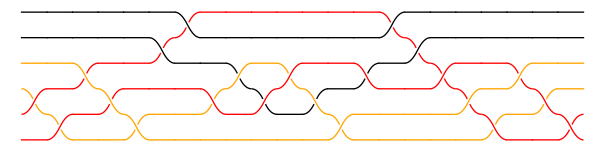
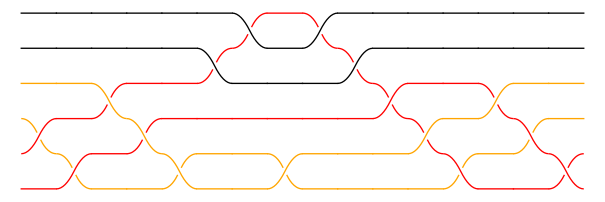
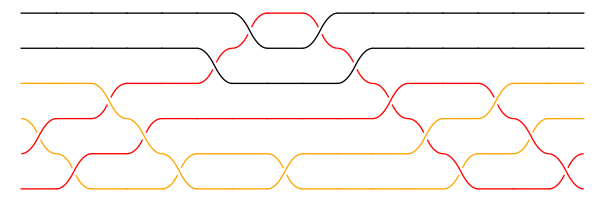
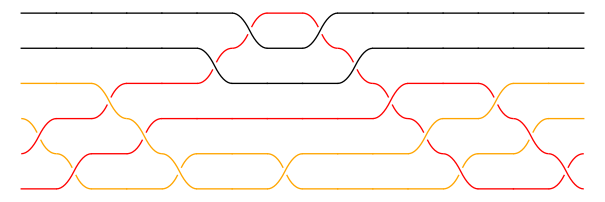
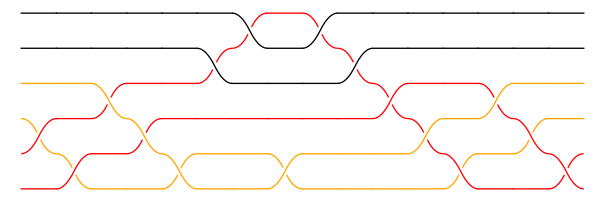
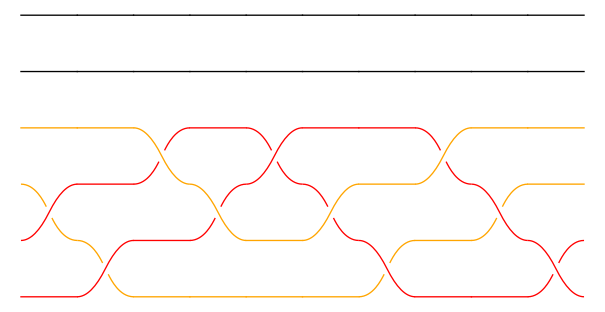
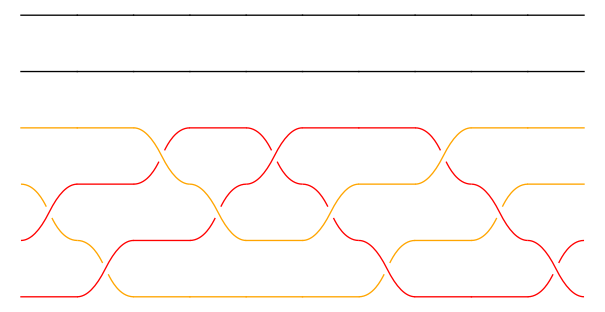
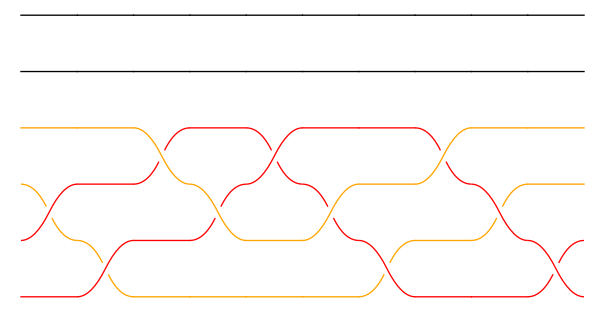
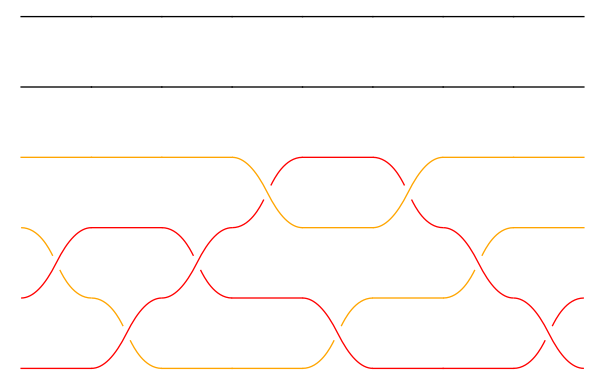
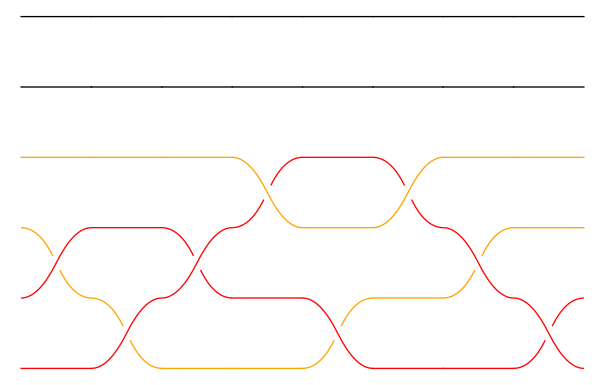
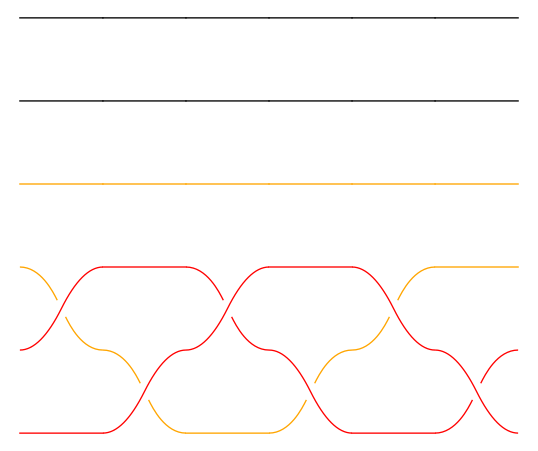
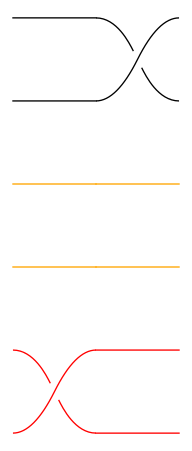
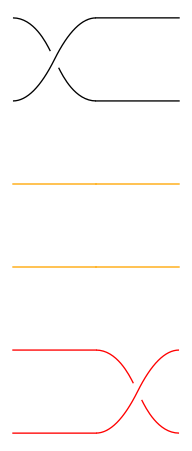
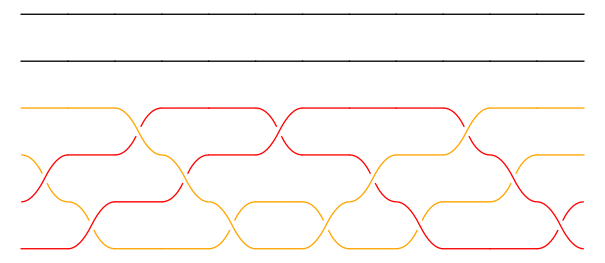
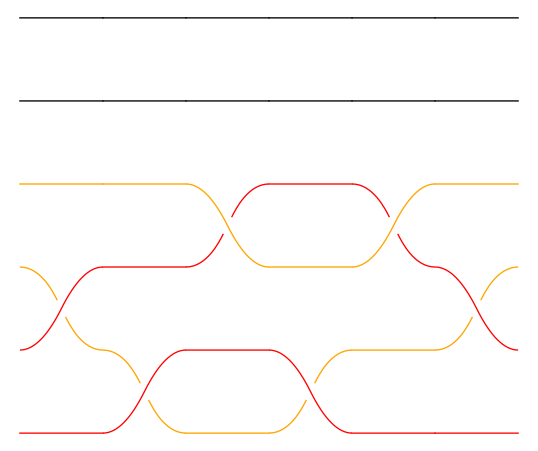
Sage doesn’t like to draw the trivial braid. One can visually check that the final braid shown above is indeed trivial. And there you have it! The figures are indeed equal in the braid group. This is an algorithmically generated human-verifiable proof that the figures are inverses of each other.
It will need a lot of work to make it more palatable and “interpretable.”
Hatcher and Brendle have a nice presentation of the loop braid group in the following paper.
Brendle, Tara E., and Allen Hatcher. “Configuration spaces of rings and wickets.” Commentarii Mathematici Helvetici 88.1 (2013): 131-162.
There are the “braid relation” like equivalences. You can find these documented in Proposition 3.2 and Fig. 3 of their paper.
An important detail.
Hatcher and Brendle also have the relations:
$$ |i - j| > 1 \Longrightarrow [\rho_i,\rho_j] = [\sigma_i,\sigma_j] = [\rho_i,\sigma_j] = e. $$
These relations essentially say that all the generators commute if they are far enough apart.
In our case, with $n = 3$ loops, they can never get that far apart.
In addition to the braid-like relations, there are the twist relations. These come from Proposition 3.6 of the Hatcher-Brendle paper.
We highlight the special role of T5a. This is an especially complicated relation. It governs how twisting a “host” loop impacts any loops passing through the host. In a sense, it is the only non-obvious relation in the loop braid group.
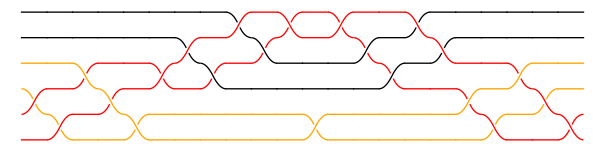
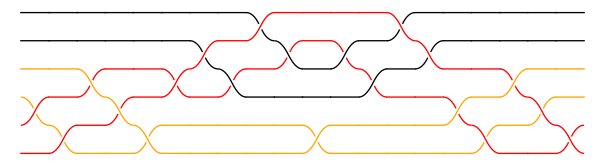
In contrast to the automated equivalence given above, which used only the braid relation and Dehornoy’s combing algorithm, we can prove the equivalence using the loop braid relations.
| Stage | Relations |
 | |
 | |
 | |
 | |
 | |
 | |
 | |
 | |
 | |
 | |
 | |
 | |
 | |
 | |
 | |
 | |
 | |
 | |
 | |
 | |
 | |
 | |
 | |
 | |
 | |
 | |
 | |
 |
Published: Aug 24, 2026 @ 09:33.
Last Modified: Sep 1, 2026 @ 16:15.
Thanks for reading! If you have any comments or questions about the content, please let me know. Anyone can contact me by email.